Skip to content

Maasai Mara National Reserve: The Ultimate Guide to Kenya’s Iconic Safari Destination
The Maasai Mara National Reserve stands as one of Africa’s most celebrated wildlife destinations. Spanning roughly 1,510 square kilometres of open savanna, riverine woodland, and rolling hills in southwestern Kenya, it forms the northern extension of the greater Serengeti ecosystem. Every year, travellers from around the world arrive hoping to witness the Great Wildebeest Migration, spot the Big Five at close range, and experience the living culture of the Maasai people who have shared these plains for centuries.
This comprehensive guide covers everything you need to plan a memorable visit: the best time to go, high and low season climate differences, Maasai village culture, hot air balloon safaris, realistic trip costs, current safety information, the best areas inside the reserve, and official entry fees. Whether you are planning your first African safari or returning for another migration season, the information below will help you make informed decisions.
Best Time to Visit Maasai Mara National Reserve
The Maasai Mara National Reserve is a spectacular year-round safari destination, but each season offers a distinctly different experience. The best time to visit depends on what you want from your safari—whether it’s witnessing the Great Migration, enjoying exceptional wildlife viewing, avoiding crowds, finding lower travel rates, or experiencing the reserve at its lushest and most beautiful.
Understanding the seasonal changes can help you choose the perfect time for your adventure. The Maasai Mara National Reserve offers unforgettable wildlife encounters throughout the year, from dramatic predator sightings during the dry season to peaceful game drives across vibrant green landscapes during the rains.


Peak Migration Season (July to October)
This is the most popular time to visit the Maasai Mara National Reserve, especially for travellers hoping to witness the spectacular Great Migration. From late June or early July, more than 1.5 million wildebeest, along with hundreds of thousands of zebras and large numbers of gazelles, move north from Tanzania’s Serengeti in search of fresh grazing and water.
The famous Mara River crossings, one of Africa’s most thrilling wildlife spectacles, generally occur between late July and September, although the exact timing depends heavily on rainfall and grazing conditions. As the herds gather along the riverbanks before making the dangerous crossing, crocodiles and waiting predators create some of the most dramatic moments of the safari.
The dry season also brings excellent wildlife viewing, as shorter grass and limited water make animals easier to spot. Lions, cheetahs, leopards, hyenas, and other predators become particularly active as they follow the migrating herds. However, this peak season also means higher accommodation rates, busier camps, and more safari vehicles around popular wildlife sightings.
For travellers seeking the ultimate migration experience, Maasai Mara National Reserve during this period offers an unforgettable combination of dramatic landscapes, abundant wildlife, and extraordinary predator-prey encounters.


Shoulder and Dry Seasons (January–February and June)
January and February are excellent months to explore the Maasai Mara National Reserve, offering warm temperatures, mostly dry conditions, and rewarding wildlife encounters. With relatively fewer visitors than during the Great Migration season, game drives can feel more relaxed and exclusive. Predators such as lions and cheetahs are often easier to spot, while the landscape can remain beautifully green following the short rains.
June marks the beginning of the transition into the drier season and is another excellent time for a safari. Wildlife viewing conditions improve as vegetation begins to thin, roads are generally more reliable, and visitor numbers are still lower than during the busy July–October period. Early movements of wildebeest may also begin, adding an exciting possibility for travellers hoping to catch the first signs of the migration.
For a balance of good wildlife viewing, pleasant weather, fewer crowds, and more moderate safari rates, January, February, and June can be excellent times to experience the Maasai Mara National Reserve.


Green / Low Season (March–May and November)
The long rains, mainly experienced in April and May, bring a quieter and more affordable side of the Maasai Mara National Reserve. Visitor numbers are at their lowest, making this an excellent period for travellers seeking better value, peaceful game drives, and fewer vehicles at wildlife sightings. The plains transform into vivid green landscapes, while dramatic skies and fresh vegetation create exceptional scenery for photography.
Wildlife remains abundant during the green season, with resident species—including the Big Five—continuing to roam the reserve. Birdwatchers are also rewarded with impressive bird activity as migratory and resident species thrive in the lush environment. However, heavy rainfall can make some tracks muddy, and certain remote areas may become more challenging to access.
November brings the shorter rains, refreshing the landscape and creating beautiful, softer scenery while visitor numbers remain relatively low. For travellers who value tranquillity, lush landscapes, excellent photography, and better safari value, the green season can be a rewarding time to experience the Maasai Mara National Reserve.
There is no single “best” month for every traveller. Choose July–October for the migration spectacle, January–February for big cats and good weather with fewer crowds, or April–May if budget and solitude matter most.
High Season and Low Season Climate in the Maasai Mara
The Mara sits at an elevation of about 1,500–1,800 metres, giving it a milder climate than lower-lying Kenyan parks.
High / Dry Season (June–October)
Daytime temperatures typically range from 23–28°C. Nights and early mornings can drop to 10–14°C, so warm layers are essential for dawn game drives. Rainfall is minimal, skies are clear, and the grass is short — ideal for spotting animals. Dust can increase toward the end of the dry period.
Low / Green Season (November–May)
The Maasai Mara National Reserve enjoys a generally mild climate throughout the year, with daytime temperatures typically ranging from 25°C to 29°C and cooler evenings and early mornings. During the rainy seasons, the air becomes fresher, humidity increases, and the surrounding plains transform into lush green landscapes.
The long rains usually occur from March to May, with April often experiencing some of the heaviest rainfall. November and December bring the short rains, which are generally lighter and occur in shorter bursts. These showers refresh the grasslands, support abundant birdlife, and create dramatic skies that are ideal for photography.
Occasional thunderstorms can make unpaved safari tracks muddy and more challenging, particularly after heavy downpours. However, most main routes remain accessible, especially when travelling in a well-equipped 4×4 safari vehicle. For travellers who enjoy greener scenery, fewer crowds, and a peaceful atmosphere, the rainy seasons can offer a beautiful and rewarding Maasai Mara National Reserve experience.
Year-round, the Mara experiences significant day-to-night temperature swings. Pack layers, a good rain jacket for the green season, and sun protection at all times.
Maasai Village Culture and Authentic Experiences
The Maasai people are an integral part of the cultural identity and heritage surrounding the Maasai Mara National Reserve. Traditionally pastoralists, the Maasai have lived alongside wildlife for generations, moving their cattle across the expansive rangelands while maintaining a deep connection with the land and its natural resources.
Today, many Maasai communities play an important role in wildlife conservation through community conservancies and tourism initiatives. These programs create opportunities for local families to earn income from tourism while encouraging the protection of wildlife habitats and open grazing areas.
A visit to the Mara can therefore offer more than unforgettable wildlife encounters. Travellers can also experience Maasai culture through village visits, cultural experiences, traditional dances, storytelling, and community-led tourism, gaining a deeper understanding of the people whose heritage is closely connected to this remarkable landscape.
Supporting responsible, community-based tourism helps ensure that the benefits of safari travel reach local communities while contributing to the long-term conservation of the Maasai Mara National Reserve.


A typical village visit (often called a manyatta or boma visit) includes:
- A welcome by warriors and women in traditional red shuka cloths and elaborate beadwork
- The famous adumu (jumping dance) performed by young men
- A walk through the circular homestead of mud-and-dung houses built by women
- Insights into cattle culture, age-set systems, fire-making, and medicinal plants
- Opportunities to purchase handmade beadwork directly from the artisans
Visits arranged through reputable camps or conservancies (especially in areas such as Mara North, Naboisho, or near Sekenani and Talek) tend to channel fees more directly to the host community. Expect to pay roughly USD 20–50 per person. Always ask permission before photographing people, and approach the experience with respect rather than as a performance.
The Maasai language is Maa. A simple greeting of “Sopa” (hello) is appreciated. Conservancy models have created meaningful economic links between tourism and Maasai landowners, helping protect the wider ecosystem beyond the national reserve boundaries.
Hot Air Balloon Safaris in the Maasai Mara
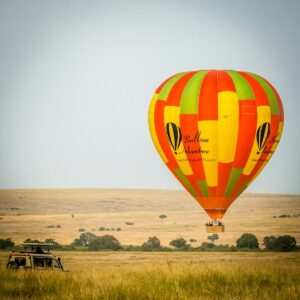
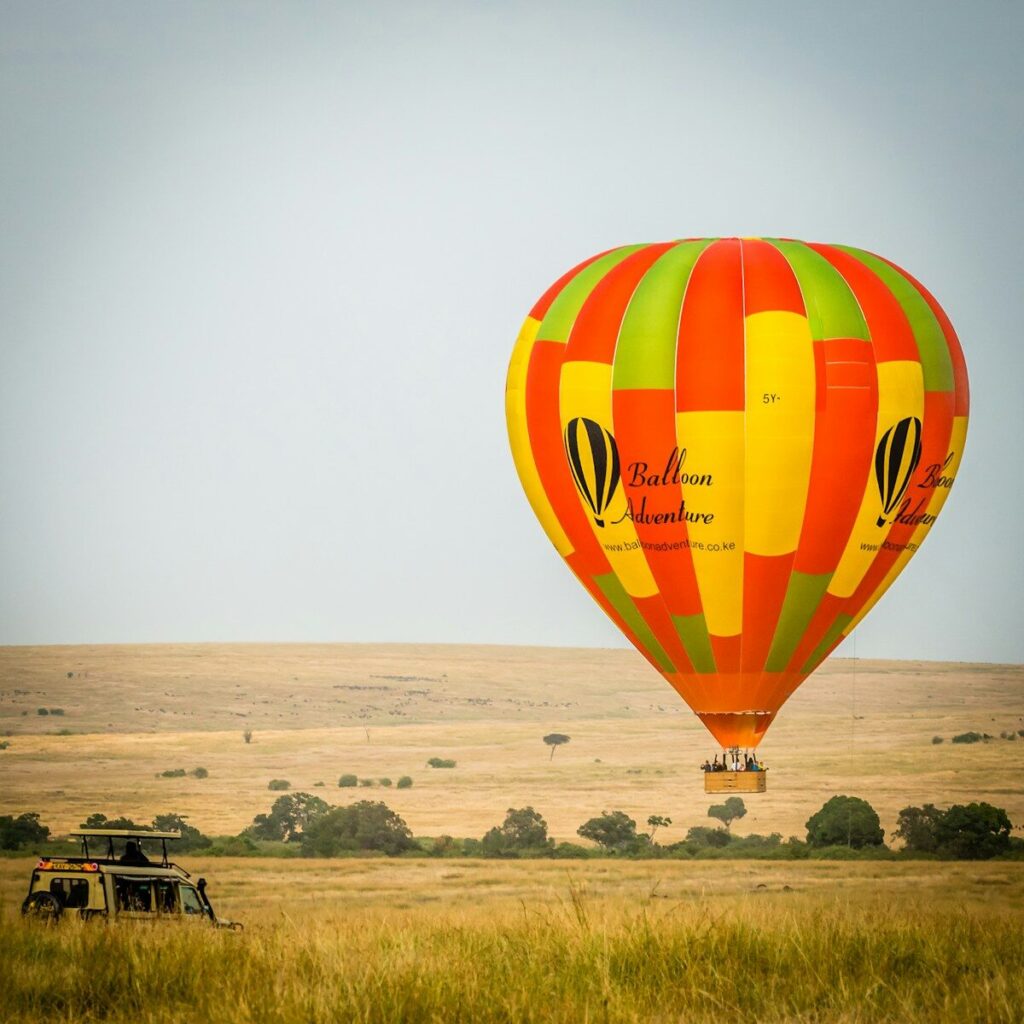
A dawn hot air balloon flight is one of the most memorable optional experiences in the Mara. Guests are collected from camp in the pre-dawn darkness (usually between 4:30 and 5:30 a.m.), transferred to a launch site, and watch the enormous envelope inflate under the stars. As the sun rises, the balloon lifts silently over the plains.
Flights typically last 45–75 minutes. From above you gain a unique perspective on the scale of the landscape — the winding Mara River, the Oloololo Escarpment, vast herds, and the endless horizon stretching toward the Serengeti. Wildlife behaves naturally because the balloon drifts quietly with the wind. After landing, a champagne bush breakfast is served in the open savanna.
2026 costs generally range from USD 450–650 per person for a shared flight (including the bush breakfast and transfers). Private charters cost significantly more. Book well in advance, especially for July–October. Flights operate year-round but are weather-dependent and more frequently cancelled during heavy rains.
How Much Will a Maasai Mara Trip Cost?
Safari costs vary widely according to season, accommodation standard, group size, and whether you travel by road or fly in.
Approximate 2026 per-person daily ranges (sharing basis):
- Budget (shared vehicle, basic tented camp or campsite): USD 150–450
- Mid-range (comfortable tented camp or lodge, private or small-group vehicle): USD 350–700+
- Luxury / Conservancy (high-end camps, exclusive activities, often all-inclusive): USD 800–1,500+
Typical 3–4 night packages from Nairobi (per person sharing):
- Budget road safari: roughly USD 800–1,600
- Mid-range: USD 1,800–3,500
- Luxury: USD 3,500–9,000+
These figures usually include park or conservancy fees, accommodation, meals, game drives, and transfers. International flights, travel insurance, visas, tips, and optional activities (balloon flights, village visits) are extra. High season (July–October) commands premium rates; the green season offers the best value.
Is It Safe to Visit Maasai Mara Now?
Yes. The Maasai Mara National Reserve is widely considered a safe and well-established safari destination for organised travellers. Thousands of visitors enjoy Maasai Mara safaris each year, with tourism supported by trained guides, park rangers, conservancy teams, and security personnel. The reserve’s remote location, established tourism infrastructure, and experienced safari operators help create a safe environment for visitors.
When it comes to Maasai Mara safety, the main risks travellers should be aware of are generally wildlife-related rather than criminal. The Mara is home to lions, elephants, leopards, buffalo, cheetahs, hippos, and other wild animals, so following wildlife safety rules is essential. During game drives, guests should remain inside the safari vehicle unless their professional guide has specifically identified a safe area for getting out. Never approach animals, attempt to feed wildlife, or leave the vehicle without permission.
Most Maasai Mara safari camps and lodges have trained staff and night security, with many employing Maasai askaris to escort guests between accommodation areas after dark. Walking around camps alone at night is generally discouraged because wild animals can move freely through unfenced areas. If you need to leave your tent or lodge after sunset, always request an escort.
Travellers should also consider Kenya travel safety when travelling to and from the Mara. When passing through Nairobi or other urban areas, use reputable airport transfers, trusted taxi services, or your safari company’s transportation. Avoid walking alone at night in unfamiliar areas and keep valuables secure, as you would when travelling in any major city.
Choosing a licensed safari operator is another important part of a safe safari experience. Reputable Kenya safari operators use experienced driver-guides who understand animal behaviour, park regulations, road conditions, and emergency procedures. A professional Maasai Mara safari guide can also help you maintain a safe distance from wildlife while providing a better and more informative game-viewing experience.
The Mara’s wildlife conservancies also play an important role in both conservation and visitor security. Community conservancies surrounding the reserve work closely with tourism operators and local communities to protect wildlife, manage habitats, and support responsible tourism.
There have been no widespread security concerns that have prevented normal tourism operations in the Mara in recent seasons, and safari camps and tour companies continue to welcome international visitors. However, conditions can change, so travellers should always check current Kenya travel advisories before departure and follow guidance from their safari operator.
For the best Maasai Mara travel experience, choose a reputable camp or lodge, travel with an experienced guide, remain inside the vehicle during game drives, respect park regulations, and listen carefully to your guide’s instructions. With sensible precautions and responsible travel practices, the Maasai Mara National Reserve can be an exciting, comfortable, and memorable destination for families, couples, solo travellers, and first-time safari visitors.
What Are the Best Places to Visit in the Maasai Mara National Reserve?
The greater Mara ecosystem offers several distinct zones:
- Mara River and Crossing Points — The stage for the famous wildebeest crossings (July–October). Hippos and crocodiles are resident year-round.
- Musiara Marsh (Northern Sector) — Famous for the Marsh Pride of lions and excellent year-round game viewing. Linked to classic wildlife documentaries.
- Mara Triangle (Western Sector) — Managed separately, often quieter, with strong rhino potential, scenic escarpment views, and good access to river crossings from the less crowded side.
- Central and Eastern Plains (including Paradise Plains and areas around Seronera-equivalent zones) — Classic open savanna excellent for cheetahs, lions, and plains game.
- Surrounding Conservancies (Mara North, Naboisho, Olare Motorogi, etc.) — Offer lower vehicle density, night drives, walking safaris, and exclusive experiences while supporting Maasai landowners.
Combining time in the main reserve with at least one conservancy stay often provides the richest overall experience.
How Much Does It Cost to Enter Maasai Mara National Park?
As of 2026, official non-resident entry fees set by Narok County Government are:
| Category | Low Season (Jan–Jun) | High Season (Jul–Dec) |
|---|---|---|
| Adult (non-resident) | USD 100 per day | USD 200 per day |
| Child (9–17 years) | USD 50 per day | USD 50 per day |
| Child (under 8/9) | Free | Free |
Fees are charged per person per chargeable day (often with a 12-hour or 24-hour validity window depending on exact gate rules). Kenyan citizens and East African residents pay substantially lower rates in Kenyan shillings. Vehicle fees and camping fees apply separately. Payment is typically cashless. Always confirm the latest rates with your operator, as county schedules can be updated.
How many days do I need in the Maasai Mara?
A minimum of three nights is recommended to allow proper game viewing without feeling rushed. Four to five nights is ideal if you want to combine the main reserve with a conservancy or include a balloon flight.
Can I see the Big Five in the Maasai Mara?
Yes. Lions, leopards, elephants, and buffalo are regularly sighted. Black rhinos are present but rarer and more commonly encountered in the Mara Triangle and certain conservancies.
Is the Great Migration guaranteed?
No. Timing depends on rainfall. July–October offers the highest probability of river crossings, but exact dates vary each year. Resident wildlife remains excellent outside migration months.
Do I need a 4×4 vehicle?
Yes. All serious game drives require a high-clearance 4×4 with a pop-up roof. Shared or private Land Cruisers are standard.
What should I pack for a Maasai Mara safari?
Neutral-coloured clothing, layers for cool mornings, a warm jacket, hat, sunscreen, binoculars, camera with extra batteries, insect repellent, and any personal medications. Soft-sided luggage is preferred for light-aircraft transfers.
The Maasai Mara delivers one of the planet’s greatest wildlife experiences. With careful planning around seasons, realistic budgeting, and respect for both the animals and the Maasai communities who share the land, your safari can be both unforgettable and responsible. Book early for peak months, choose operators who support conservation and community, and prepare to be captivated by the open plains, the drama of predator and prey, and the enduring culture of the Mara.